
Panama Real Estate Investment
A Practical Guide for North American Buyers
Connect with one of our Investment Advisors
Write to us and an advisor will contact you shortly.
Direct answer: Panama real estate investment appeals to North Americans because foreigners hold the same ownership rights as citizens, titled property is recorded in a public registry, and a qualifying purchase can support residency. Prices, rental demand, and tax rules vary sharply by neighborhood, so location and legal due diligence decide your outcome.
Key takeaways
-
- Foreign buyers in Panama get the same property rights as citizens, with no special permit for titled real estate.
- Titled property is registered at the Public Registry; “rights of possession” land is not titled and carries more risk.
- A purchase of at least $200,000 can qualify you for the Friendly Nations Visa under Executive Decree 197 of 2021.
- Primary residences pay no annual property tax on the first $120,000 of registered value (Law 66 of 2017).
- Panama City areas like El Cangrejo, Costa del Este, and San Francisco differ widely in price and rental yield.
The qualified investor program
Is Panama a good country for real estate investment?
Panama runs on the US dollar and places no restrictions on foreign ownership of titled property. That removes two worries that stop many first-time overseas buyers. The banking sector is deep for the region. Set that against a slow court system and an oversupply of near-identical condos in parts of Panama City.
Can foreigners legally own property in Panama?
Yes. Foreigners can buy and hold titled property in their own name, with the same rights as citizens, and residency is not required to purchase. The main limit is constitutional: no foreign title to land within 10 kilometers of a border, plus restrictions on some islands.
Titled property vs. rights of possession
Titled property (propiedad titulada) is registered at the Public Registry and gives recorded ownership. Rights of possession (derecho posesorio) is only an occupancy claim over untitled state land. It shows up often in Bocas del Toro and some beach zones. It is harder to finance or insure, and legally weaker. Check the category before you sign.
Step-by-step process
Our advisors help you identify the ideal property.
Our partner law firms prepare all required documentation.
Finalize purchase and register the property.
Your file is presented to Panama’s immigration authorities.
Receive your residency ID and welcome to Panama.
Can Panama real estate investment lead to residency?
Yes, indirectly. A titled purchase of at least $200,000 can support a Friendly Nations Visa, and at least $300,000 can support Qualified Investor permanent residency during the current window. The purchase alone grants nothing. You file a separate immigration case with a Panamanian attorney.
Friendly Nations Visa (Executive Decree 197 of 2021)
This route covers citizens of roughly 50 countries, including the US and Canada. Since Executive Decree 197 of 2021, the property option requires a $200,000 titled home in your personal name, and it can be mortgaged by a Panamanian bank. You get two years of temporary residency, then permanent.
Qualified Investor Visa
This gives immediate permanent residency for a larger stake. The real estate minimum is $300,000 through October 15, 2026, then it is scheduled to rise to $500,000. Hold the investment for five years. Confirm the current figure before you plan around it.
What taxes will you pay on Panama real estate?
Sellers pay a 2% transfer tax on the higher of sale price or updated registered value, plus a capital gains charge, commonly a 3% advance credited against 10% on the real gain (Law 66 of 2017; DGI). Annual property tax works like this:
- Primary residence or patrimonio familiar tributario: nothing on the first $120,000 of value, then about 0.5% to 0.7%.
- Other property: exempt on the first $30,000, then roughly 0.6% to 1%.
- US citizens still report Panama rental income to the IRS.
Where are the best areas to buy in Panama City?
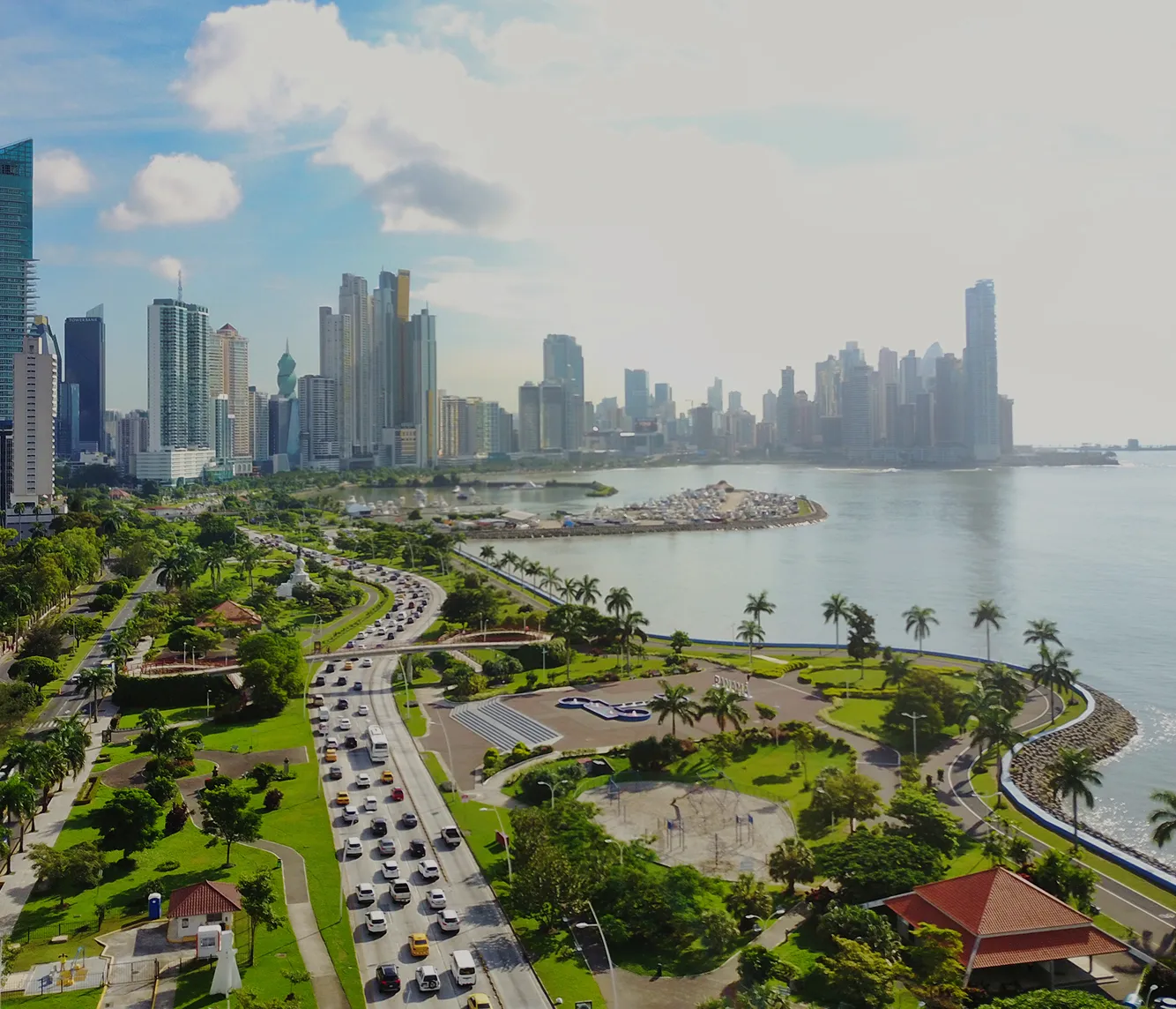
For rental demand and resale, the strongest neighborhoods are El Cangrejo, San Francisco, Costa del Este, Punta Pacífica, and Casco Viejo. El Cangrejo is walkable and older, popular with remote workers; a furnished two-bedroom there rents for approximately $1,200 to $1,900 a month (verify locally). Costa del Este is a planned district with corporate tenants and higher prices. Casco Viejo has strong short-term rental demand but strict renovation rules. For the beach or cooler air, buyers look at Coronado and Boquete.
Panama vs. Costa Rica vs. Mexico for real estate investors
Panama offers dollar stability and simple foreign ownership. Costa Rica has a deeper vacation-rental market. Mexico restricts direct coastal ownership by foreigners.
| Criteria | Panama | Costa Rica | Mexico |
|---|---|---|---|
| Foreign ownership of titled property | Full, same as citizens | Full, same as citizens | Bank trust (fideicomiso) required near coasts and borders |
| Currency | US dollar | Costa Rican colón | Mexican peso |
| Residency via property purchase | $200K or $300K routes | About $150K investor route | No fixed national property figure |
| Transfer or acquisition tax | About 2% | About 1.5% plus fees | About 2% to 5%, varies by state |
Figures are approximate and change often. Verify before you commit.
What rental yield can you expect in Panama?
Gross rental yields on Panama City condos commonly fall around 4% to 7% before vacancy, management fees, and taxes. Short-term rentals at the beach or in Boquete can show higher gross numbers, with more seasonality. Net yield drops once you subtract homeowners association fees, income tax, and empty months. Treat these as market observations, not guaranteed returns.
Frequently asked questions
Can Americans buy property in Panama?
Yes. US and Canadian citizens can buy titled property with the same rights as locals, and no residency is required. Local mortgages exist but usually ask a larger down payment from non-residents.
Does buying a house in Panama give you residency?
Not on its own. A $200,000 titled purchase supports a Friendly Nations Visa, and $300,000 supports Qualified Investor residency, but you still file a separate immigration application with a lawyer.
Is real estate in Panama a safe investment?
Titled property recorded at the Public Registry is well protected by law. The main risks are untitled land, thin due diligence, and overpaying in overbuilt condo areas. A title study and escrow handle most of that.
How much is property tax in Panama?
Primary residences pay nothing on the first $120,000 of registered value, then about 0.5% to 0.7% a year. Investment properties are taxed on value above $30,000 at roughly 0.6% to 1%.
Is Panama or Costa Rica better for real estate investment?
Panama gives you the dollar, lower transfer costs, and clear residency-by-property rules. Costa Rica has a stronger vacation-rental market and a lower investor threshold. It depends on whether you want stability or tourism upside.
Panama rewards buyers who make due diligence the main event. The dollar economy, clear ownership law, and property-linked residency are real advantages, but a bad title or the wrong building can erase them. Your next step: before you make an offer, hire a licensed Panamanian attorney who does not represent the seller to run an independent title study at the Public Registry.
Disclaimer: This is general information, not legal, tax, or investment advice. Prices, tax rates, and visa rules change. Confirm every figure with a licensed Panamanian attorney and the relevant government authority before acting.
Last updated: September 2026. Verify current prices, tax rates, and visa requirements as of this date.